









Family Background
Education
Career
Scholarly Interests
Publications
Public Lectures
Home and Family
Honors and Awards
Public Service
Significant Encounters
My Current Book: Captive Gods: Religion and the Rise of Social Science
Now streaming on PBS: “Wisdom Keepers: Healing a Divided People,” in which I appear
Family Background
Kwame Anthony Akroma-Ampim Kusi Appiah was born on Saturday, May 8 1954 in London, where his Ghanaian father was a law student, but moved at the age of six months, with his parents, to Ghana. (You know it was a Saturday because “Kwame” is the Akan name for a boy born on a Saturday.) His father, Joseph Emmanuel Appiah, a lawyer and politician, was also, at various times, a Member of Parliament, a political prisoner, an ambassador, and a President of the Ghana Bar Association; his mother, the novelist, Akan art collector and scholar, and children’s writer, Peggy Appiah, whose family was English, was active in the social, philanthropic and cultural life of Kumasi. Their marriage in 1953 was widely covered in the international press because it was one of the first “inter-racial society weddings” in Britain; and is said to have been one of the inspirations for the film “Guess Who’s Coming to Dinner.”
Kwame’s grandfather, J. W. K. Appiah was the Chief Secretary of the Asanteman Council, the ruling body of the Asante kingdom. In 1970, his uncle by marriage, Otumfuo Nana Opoku Ware II succeeded his great-uncle by marriage, Otumfuo Sir Osei Agyeman Prempeh II, as Asantehene or King of Ashanti. His three younger sisters Isobel, Adwoa and Abena, were born in Ghana. They were members of a non-denominational Christian church called St. George’s, in Kumasi, of which their mother was an elder, and they were also privileged to have Muslim and Jewish cousins.

As a child, Kwame spent a good deal of time in England, at the home of his grandmother, Dame Isobel Cripps, widow of the English statesman Sir Stafford Cripps. Sir Stafford was the British Ambassador to Moscow during the Second World War and served, after the war, as Britain’s Chancellor of the Exchequer, or Minister of Finance. He was also involved in negotiating the terms for Indian independence. Stafford’s father, Lord Parmoor, was the first Labour leader of the house of Lords, with Viscount Haldane, and a major supporter, with his wife, Marian, of the League of Nations (on whose Council he represented Britain) and Save the Children. (Parmoor’s grandfather, Joseph Cripps, and his wife’s grandfather, Richard Potter, were both members of the reform parliament of 1832.) Parmoor’s sister-in-law and brother-in-law, Beatrice and Sidney Webb, were the founders, with George Bernard Shaw and Graham Wallace, of the London School of Economics, and were central figures in the Fabian Society. Isobel Cripps traveled widely, including on an extended visit to China in 1947, accompanied by her daughter Peggy, where she met Chairman Mao and Generalissimo and Madame Chiang Kai Shek as President of the British United Aid to China Fund, and she went on to chair its successor, the Sino-British Fellowship Trust, for many years.
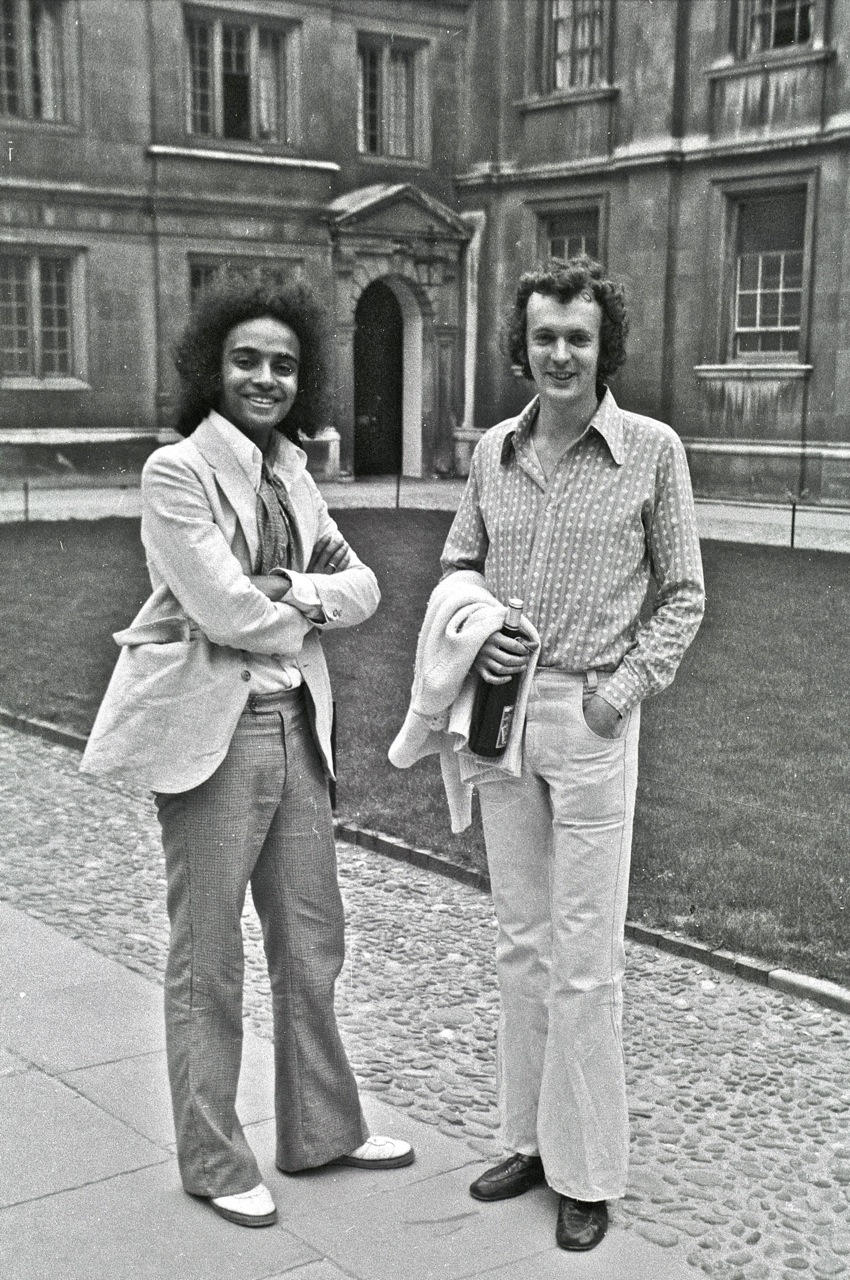
Kwame Anthony Appiah was educated at the University Primary School at the Kwame Nkrumah University of Science and Technology, Kumasi; at Ullenwood Manor, in Gloucestershire, and Port Regis and Bryanston Schools, in Dorset. He went on to Clare College, Cambridge University, in England, where he took the B.A. in philosophy in 1975, having transferred from the Medical Sciences degree program, which he undertook for his first year at the university. He also learned a great deal by being a member of the informal group known as the Epiphany Philosophers. After his undergraduate career at Cambridge, he taught at the University of Ghana, Legon, an experience that encouraged him to return for graduate study. He received a Ph.D. from Cambridge in Philosophy in 1982.

Career
His Cambridge dissertation, advised by D. H. Mellor, explored the foundations of probabilistic semantics, bringing together issues in the philosophy of language and the philosophy of mind; once revised, these arguments were published by Cambridge University Press as Assertion and Conditionals. Out of that first monograph grew a second book, For Truth in Semantics, which explored critically Michael Dummett’s defenses of semantic anti-realism, the thesis that the central notion in the theory of meaning should be not truth but assertibility.
Since Cambridge, Professor Appiah has taught at Yale, Cornell, Duke, and Harvard universities and lectured at many other institutions in the United States, Germany, Ghana, and South Africa, as well as at the École des Hautes Études en Sciences Sociales in Paris. He became an American citizen on November 21 1997, taking the naturalization oath in Faneuil Hall in Boston, facing the enormous picture of “Webster’s reply to Hayne” (1843-1850) by George Peter Alexander Healy, in the “Cradle of Liberty.”
From 2002 to 2013 he was a member of the Princeton University faculty, where he had appointments in the Philosophy Department and the University Center for Human Values, as well as being associated with the Center for African American Studies, the Programs in African Studies and Translation Studies, and the Departments of Comparative Literature and Politics. In January 2014, on becoming an emeritus professor at Princeton, he took up an appointment as Professor of Philosophy and Law at New York University, where he teaches both in New York and in Abu Dhabi and has lectured at the NYU Global Site in Florence.
Scholarly Interests
Professor Appiah has also published widely in literary and cultural studies, with a focus on African and African-American culture. In 1992, Oxford University Press brought out In My Father’s House, which explores the role of African and African-American intellectuals in shaping contemporary African cultural life. This book won the Anisfield-Wolf Book Award as well as the Herskovits Award of the African Studies Association for “the most important scholarly work in African studies published in English.” His current interests range over African and African-American intellectual history and literary studies, ethics, the connections between moral philosophy and psychology, and political philosophy and the philosophy of the social sciences; and he has also taught regularly about African traditional religions. His work at the interface of ethics and psychology was recognized in a special issue of the journal Neuroethics devoted to his book Experiments in Ethics. His work on identity was the subject of a symposium on The Lies that Bind in the journal Philosophy and Public Issues in 2021. He also has a continuing interest in literary criticism and theory and a 2018 issue of the journal New Literary History was devoted to his work; but his major current work has to do with the connection between theory and practice in moral life. He is also working on a short book about the life and work of France Fanon.
Publications
Since his first two books in the philosophy of language and In My Father’s House, Professor Appiah’s publications have covered a wide range of topics. In 1996, he published Color Conscious: The Political Morality of Race with Amy Gutmann, and in 1997 the Dictionary of Global Culture, co‑edited with Henry Louis Gates Jr. Along with Professor Gates he has also edited the Encarta Africana CD-ROM encyclopedia, published by Microsoft, which became the Perseus Africana encyclopedia in book form. This is now available in a revised multi-volume edition from Oxford University Press. In 2003, he coauthored Bu Me Bε: Proverbs of the Akan (of which his mother, the writer Peggy Appiah, was the major author), an annotated edition of 7,500 proverbs in Twi, the language of Asante. He is also the author of three novels, of which the first, Avenging Angel, was largely set at his alma mater, Clare College, Cambridge, and he has written and reviewed regularly for the New York Review of Books.
In 2004, Oxford University Press published his introduction to contemporary philosophy entitled Thinking It Through. In January 2005, Princeton University Press published The Ethics of Identity, and in February 2006 W. W. Norton published Cosmopolitanism: Ethics in a World of Strangers, which won the 2007 Arthur Ross Award of the Council on Foreign Relations. In January 2008, Harvard University Press published his Experiments in Ethics, based on his 2005 Flexner lectures at Bryn Mawr. In November 2009, Forbes Magazine put Professor Appiah on a list of the world’s seven most powerful thinkers, selected by Princeton’s President. W. W. Norton published The Honor Code: How Moral Revolutions Happen in October 2010. His work has been translated into many languages, including Arabic, Catalan, Chinese, Croatian, Dutch, French, German, Georgian, Hebrew, Indonesian, Italian, Korean, Polish, Portuguese, Romanian and Spanish. In the Spring of 2014, Harvard University Press published his Lines of Descent: W. E. B. Du Bois and the Emergence of Identity. A Decent Respect: Honor in the Lives of People and of Nations was published the next year by the Faculty of Law of the University of Hong Kong.
In 2017, Harvard University Press published a book based on his Carus lectures at the Eastern Division annual meetings of the American Philosophical Association in December 2013. Entitled As If: Idealization and Ideals, it discusses the role of idealization and ideals in science, philosophy, ethics, and political philosophy. The Lies that Bind, a book based on his 2016 BBC Reith Lectures on “Mistaken Identities,” was published by Profile in the United Kingdom and W. W. Norton in the United States in 2018. Captive Gods: Religion and the Rise of Social Science, based on the 2017 Terry Lectures, will be published by Yale University Press in October 2025.
In October 2015, he began to write the weekly Ethicist column for the New York Times magazine, answering readers’ questions about their ethical quandaries. His preparation for this task was a few months as one of three “Ethicists”—the other two being the novelist Amy Bloom and the legal scholar Kenji Yoshino—who recorded a weekly podcast discussion in response to readers’ questions. In 2019, he contributed an essay to the catalog for Ghana’s first installation at the Venice Biennale.
Over the years, Appiah has written in the press and spoken on radio and television about issues of public importance, from the role of honor in political life to the challenges raised by many forms of identity, including partisan identity, for democratic politics.
The website for the Institute of Arts and Ideas published his poem on Why Philosophy Matters on World Philosophy Day, 2017.
Public Lectures
Professor Appiah travels widely lecturing on the topics he writes about: in the summer of 2012, for example, he gave lectures in Oslo (on multiculturalism), Melbourne (on global citizenship), and Sao Paulo (on identity), and then spoke in the fall in the United States on honor in Knoxville, Youngstown, Schenectady, Cambridge and New York, and on cosmopolitanism at the Century Club, in New York, and in Edison, New Jersey. After a discussion of courage in Paris, organized by the Villa Gillet, in November 2012, he gave lectures in 2013 in Hong Kong, Brazil, Israel and New Zealand, as well as in a number of places in the United States. In March 2015, over NYU’s Spring Break, he gave a series of seminars at the Centre For Research in the Arts, Social Sciences and Humanities at Cambridge University, along with a public conversation on cosmopolitanism with the distinguished geographer, Professor Ash Amin.
In July 2015 he discussed moral revolutions at Le Conversazione in Capri. In September 2016, he spoke about ethics and the humanities at the University of North Carolina at Chapel Hill, and equality at Ohio State University. In October and November 2016, his Reith Lectures, discussing ways in which people’s thinking about religion, nation, race and culture often reflects misunderstandings about identity, were broadcast on the BBC. They were recorded in London, Glasgow, Accra and New York. In the summer of 2017, he gave a seminar on W. E. B. Dubois at the New School’s Institute for Critical Social Inquiry. He gave a plenary address entitled “Two Cheers for Equality” at the meeting of the European Society for Analytic Philosophy in Munich in August, 2017. In December 2018 he gave the George W. Gay Lecture at Harvard’s Medical School on “The Politics of Identity, the Injuries of Class,” the first Gay lecture in the second century of the prize’s existence.
In February 2019, he gave the opening lecture of “A Night of Philosophy and Ideas,” at the Brooklyn Public Library, organized with the Cultural Services of the French Embassy, and then had a public conversation on “Identity and the Law” with Emerson Sykes for the ACLU’s Podcast, “At Liberty”. He participated in a seminar on Identity and Genetics at NYU Abu Dhabi and gave The Harper Lecture at the University of Denver. In March he gave the Reasons for Hope Lecture at the Central European University, Budapest, and a talk for RESET at The Italian Academy for Advanced Studies in America, Columbia University, and a Louis J. Gambaccini Civic Engagement Series lecture at the Eagleton Institute, Rutgers University, as well as the Burke Lecture at Oakland University; and he recorded a discussion for the “Why is this Happening?” podcast with Chris Hayes and took part in the Assembly of the Society for Progress at Harvard’s Kennedy School. In April he appeared at a Public Forum, “Of, By & For The People,” in conversation with Susan Lori Parks and Oskar Eustis at the Public Theater. Over the next couple of weeks, he gave the Kant Lectures at Stanford University and the Whitehead Lectures at Harvard.
In the autumn of 2019, he gave lectures in Stockholm at the Maximteatern, in Amsterdam at the Tropenmuseum and in Rome at the Cerimonia d’Inaugurazione dell’Anno Accademico of the Libera Università Internazionale degli Studi Sociali Guido Carli (LUISS), as well as at Vanderbilt University (where he talked to the freshman class about the Lies that Bind,) the Eudaimonia Institute at Wake Forest University, and Boston College.
During the pandemic he has given many lectures through the Internet for global audiences, among them one on “The Future of Inclusion for All,” for a Vodafone-Google-Sky Business Conference in July 2020; another on “Black Lives Matter,” for the Healing the Nations conference of The Next Century Foundation; Moffet and Hempel lectures at Princeton, in September 2020 and March 2021; and a talk on “The Philosophy of Work” at Institute for Law, Philosophy, and Politics Colloquium, University College London. After double vaccination, he gave his first in-person talk on “Pandemic Lessons: The Philosophy of Work and the Modularity of Professional Ethics,” as The Tanner Lecture on Human Values, University of Michigan in September 2021. In October 2021, he received the Apostolos P. Stefanopoulos Prize in Philosophy for contributions in applied Philosophy and Ethics at Marist College and gave a lecture on “What is Racism?”
In the summer of 2022, he had an online conversation with Spencer Bailey, for the Apple Design Team on “Ethics and Design: Central Questions of Our Time,” and gave a lecture on “Living with Identities,” for The Atlantic Institute, Leadership Convening, Phuket, Thailand, and recorded two “Masterclass” lectures on “What is Utilitarianism?” and “What is Functionalism?” for the Royal Institute of Philosophy.
He gave a Getty Medal Lecture, “Whose Heritage? Preservation, Possession, and Peoples,” at the Getty Center in Los Angeles in October, 2022, and that month spoke on honor at The University of Southern Mississippi, in an Honors College Lecture, and on “Depolarizing Identity,” at the Institute for Advancing American Values, Boise State University. In November he gave a Sir Leslie Stephen Lecture at Cambridge University, entitled “This Identity we so Feverishly Cherish.”
In 2024 he gave talks at a variety of universities and colleges, including the First Annual Berggruen Lecture in March at the Pacific Division meetings of the American Philosophical Association, which discussed the nature of racism; at Stanford University’s Knight-Hennessy Scholars Program in May, on Cosmopolitanism; at the University of Muenster, in June, as the Hans Blumenberg Professor on “Ways of Belonging: Religion as Creed, as Practice… and as Identity;” and later in the month he gave lectures at the Free University of Brussels, the University of Cologne, and the University of Bonn, as well as at a number of events organized by stimmen afrikas in Cologne. On October 17, 2024, he gave a lecture on the occasion of the Latsis Foundation Prize Awards at the University of Geneva, entitled “Who am I? Who are we? The Ethics and Politics of Identity.” In November, he gave lectures at the Universities of Maastricht, Tilburg, and Groningen, on various themes to do with ethics and identity.
In early 2025, he gave lectures on “Polarization and Politics” to the the Philosophy and Politics sections of the British Academy in March, and on “How to Teach Ethics to Ordinary People,” at the Kreps Symposium, Stanford Graduate School of Business in April. And in May, he was in conversation with Antonio Monda, in his series “Le Conversazione” at NYU’s Casa Italiana in New York, where they discussed six movies: Mandabi (1968) by Ousmane Sembene, Bellissima (1951) by Luchino Visconti, Victim (1961) by Basil Dearden, The Dresser (1983) by Peter Yates, Young Törless (1966) by Volker Schlöndorff, and Mother Night (1996) by Keith Gordon. He was honored to be invited to make remarks at the dinner for the re-opening of the Michael C. Rockefeller wing at the Metropolitan Museum in May.
On July 24, 2025, Kwame Anthony Appiah appeared for an evening discussion of his work as The Ethicist in the theatre of theJefferson building of the Library of Congress, with a live audience of 400 people and an additional online audience on YouTube.
Home and Family
Kwame Anthony Appiah has homes in New York City and near Pennington, in New Jersey, which he shares with his husband, Henry Finder, Editorial Director of the New Yorker magazine. (In Pennington, they have a small sheep farm, with a few ducks and geese and some fish to round out the menagerie.) On August 8, 2011, after more than a quarter century of partnership, they were married in New York City, about two weeks after same-sex marriage was recognized by the state, with their friend Skip Gates as the sole witness.





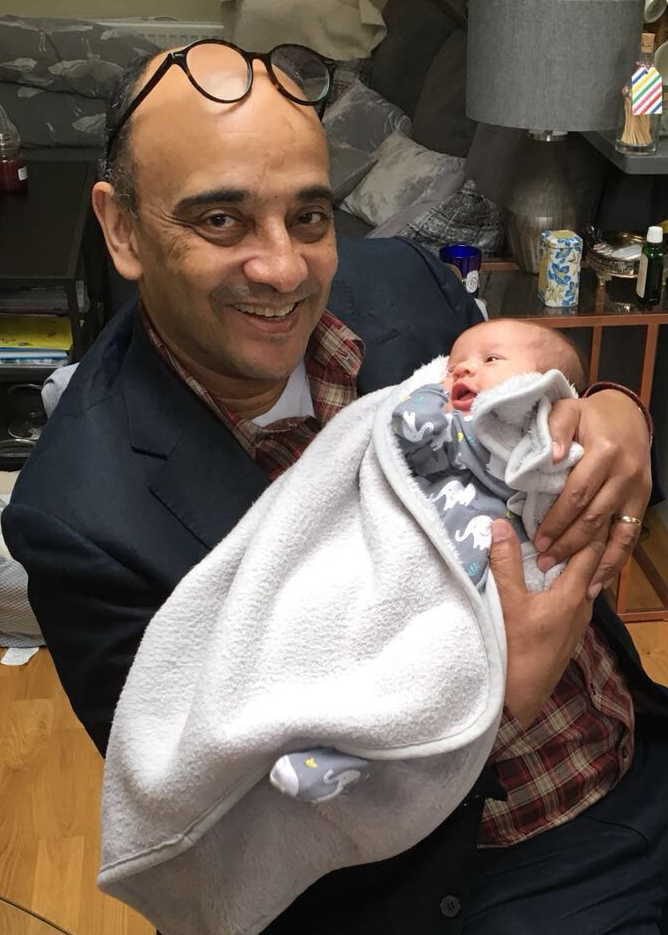
Their family is scattered across the globe. Kwame Anthony Appiah’s three sisters live in Namibia, Nigeria, and England; Isobel has a Norwegian husband, Klaus Endresen, and Adwoa’s husband, Olawale Edun, is Nigerian. Henry Finder has two sisters and two brothers, Susan, Joe, Jonathan, and Lisa. His elder sister has a Chinese husband, Lu Kun, and his two brothers have American wives. Their 14 nephews and nieces, Kristian, Anthony and Kojo Endresen, Tomiwa, Lamide and Tobi Edun, Maame Yaa, Mimi, and Joseph Appiah, Emma Finder, Zack and Ben Finder, and Hannah and Aaron Lu, currently live in Ghana, Nigeria, England, and the United States. Olanitan Edun, their first great-nephew, was born in London in April 2017, and now lives in Lagos; Alexandra Endresen, their first great-niece, and Erik Endresen, her first cousin, were born in January and February 2018. They currently live in London and near Oslo. Since then, three more great-nieces, Olanitan’s sisters Tamilore and Zadie and her cousin Naila have joined the Lagos branch of the family.






Honors and Awards
Kwame Anthony Appiah has been elected to the American Academy of Arts and Sciences and the American Philosophical Society and was inducted in 2008 into the American Academy of Arts and Letters; and he has served on the boards of the PEN American Center, the National Humanities Center and the American Academy in Berlin. Until the fall of 2009, he served as a trustee of Ashesi University College in Accra, Ghana, and now serves on its Academic Advisory Board. He has also been a member of the Advisory Board of the United Nations Democracy Fund (UNDEF). He has honorary degrees from the University of Richmond, (2000), Colgate University (2003) Bard College (2004), Fairleigh Dickinson University (2006) and Swarthmore College(2006), and received the degree of Honorary Doctor of Philosophy in May 2008 from Dickinson College, where he gave the Commencement Address in the pouring rain. In the fall of 2008, he was awarded the first Joseph B. and Toby Gittler Prize by Brandeis University for “outstanding and lasting scholarly contributions to racial, ethnic and/or religious relations.” In May 2009, in the course of a busy week, he received honorary degrees from Columbia University and the New School, and presented the Sue Kaufman award of the American Academy of Arts and Letters to Charles Bock. Colby College honored him with a Doctorate of Laws at their 189th commencement in 2010. In September 2010, he was granted an honorary Doctorate of Humane Letters at a Convocation Lecture at Berea College.
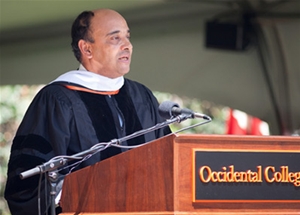
In 2007, Professor Appiah was the President of the Eastern Division of the American Philosophical Association (APA) and he then served from 2008 to 2011 as Chair of the APA’s Executive Board. For six years, ending in 2012, he was Chair of the Board of the American Council of Learned Societies. In March 2009, he succeeded Francine Prose as President of the PEN American Center, a position he held for three years. In December 2010, Foreign Policy named him one of the top 100 global thinkers. President Obama presented him (and eight others, including his friends Andrew Delbanco, Amartya Sen, Ramón Saldívar and Teo Ruiz) with the National Humanities Medal on February 13, 2012. On April 30, 2012, he was appointed by the Board of Regents of the Smithsonian to the Advisory Board of the National Museum for African Art. On May 20, 2012, he gave the Commencement Address at President Obama’s alma mater, Occidental College, on its 125th anniversary; and a few days later he traveled to Boston to receive the honorary degree of Doctor of Laws at Harvard’s 361st Commencement, which brought to an end the celebrations for Harvard’s 375th anniversary. (With his Columbia honorary degree of 2009, he now has honorary degrees from each of the colleges or universities at which President Obama earned his degrees!)
On October 18, 2013, Kwame Anthony Appiah received an honorary Doctorate of Laws from the University of Edinburgh, in recognition of his “global influence on philosophy and politics,” alongside his friends John Kufuor, former President of Ghana, the historian Emma Rothschild, and the legal philosopher Jeremy Waldron. They were all members of the Global Citizenship Commission, which held its first meeting in Edinburgh the same weekend, and delivered a report to the Secretary-General of the United Nations on “The Universal Declartion of Human Rights in the 21st Century” in April 2016.
On May 21, 2015, he spoke at the NYU Law School Commencement ceremonies for the graduating class of LLM students; and then gave a commencement address at Sarah Lawrence College the next day. Also in May of 2015, he was elected to an Honorary Fellowship at Clare College, Cambridge. In January 2016, Professor Appiah had the honor of becoming the president of the Modern Language Association. In May 2016, he spoke to the doctoral degree recipients in the College of Arts and Sciences at NYU and received an honorary degree from Wesleyan University.
The World Post listed Professor Appiah as #95 on its Global Thought Leaders Index in December 2015, which was led by Pope Francis (#1), Paul Coehlo (#2) and Muhammad Yunus (#3), and included philosophers such as Peter Singer (#16), Daniel Dennett (#22) and Martha Nussbaum (#23).
In August 2016, Kwame Anthony Appiah was enstoloed as Nana Gyamfi Akroma-Ampim Nkosuahene of Nyaduom, in Adanse, pledging allegiance to his paternal uncle, the Nyaduomhene, traditional ruler of the town which was founded by their ancestor, the early eighteenth century Asante general, Akroma-Ampim.

On November 24, 2016, Professor Appiah received the Spinozalens Prize, given by the Spinoza Prize Foundation, from the mayor of Amsterdam. (His prize lecture was published in De Groene Amsterdammer.) The prize, which is awarded biennially, pairs a living thinker with a dead one, and is “for thinkers who concern themselves with ethics and society.” Professor Appiah was paired with Hannah Arendt. On the same day, the Dutch translation of The Honor Code was published. While in the Low Countries to receive the prize, he gave lectures on “The Challenges of Identity” at Leuven University and Radboud University in Nijmegen, and discussed questions of honor with a prize-winning group of high-school students in philosophy, who had produced videos asking questions about honor.
In the Spring of 2017, he was elected as a Fellow of the Royal Society of Literature. On the 4th of July 2017, the Carnegie Corporation of New York honored Professor Appiah as one of their 2017 Great Immigrants.
In May 2018, he received an honorary doctorate of letters from Elizabethtown College in Pennsylvania, where he gave a commencement address. In the early summer of 2019, he received an honorary degree from Duke University. In January 2020, the Nouveau Magazine Littéraire, listed him as one of “les 10 philosophes qui influencent le monde.” And, a year later, in January 2021, he was awarded the Phillip L. Quinn Prize of the American Philosophical Association, “in recognition of service to philosophy and philosophers, broadly construed.” In March, he received an Honorary Doctor of Letters from Skidmore College, before giving the annual Frances Steloff Lecture. In December 2021, Frédéric Martel of “Soft Power” on Radio France chose the French edition of The Lies that Bind (Repenser l’identité) as his non-fiction book of the year. In February 2022, he was elected President of the American Academy of Arts and Letters.
In the summer of 2022, he received an honorary degree from Cambridge University, along with his friends Skip Gates, Simon Schama, and Wole Soyinka.
In May 2023, he received his first African honorary degree, a Doctorate of Letters, honoris causa, from the University of KwaZulu-Natal, towards the beginning of the month, and gave the Baccalaureate Address at Princeton University towards the end of the month. In between, he gave the 10th Royal Academy Lecture in Humanities and Social Sciences to the Royal Danish Academy in Copenhagen, and the Futures Lecture at Aarhus University, focussing on issues raised by the current avalanche of claims for the restitution of cultural property.
2024 was a year full of excitement. On January 31, the American Academy of Arts and Sciences announced that he would be granted the Don M. Randel Award for Humanistic Studies at its April Meeting. In May, he was elected as an Honorary Fellow of the Royal Society, and he was inducted on July 12. In June, he served as the Hans Blumenberg Professor at the University of Münster. Next month, on July 18, he was elected to the British Academy, as an International Fellow. On July 19th, he gave a short talk introducing the King of Ashanti, the Asantehene, at the British Museum. On August 8, the Library of Congress announced that he was to receive the Kluge Prize for Achievement in the Study of Humanity. And on September 24 and 25, he gave the Ambedkar Lectures at Columbia University School of Law on Fanon.
Public Service
Professor Appiah has served on the Boards of Facing History and Ourselves, the New York Public Library, the Public Theater, the American Academy of Arts and Letters, the American Academy of Arts and Sciences, and the World Monuments Fund, and on the Advisory Board of the Smithsonian Institution’s Museum for African Art and the Visiting Committee for the Arts of Africa, Oceania, and the Americas, at New York’s Metropolitan Museum; and he has served on the International Team of Experts for the Humboldt Forum im Berliner Schloss. He is also a founding member of the Society for Progress, which aims to advance the integration of ethical considerations into the conduct of business, combining performance and progress.
Kwame Anthony Appiah has served as a juror for the Pulitzer Prize for non-fiction in 2004; was a member of the Holberg Prize committee from 2008 to 2013; and chaired the jury for the first Berggruen Philosophy Prize from 2016 to 2021, which was won by Charles Taylor (2016), Onora O’Neil (2017), Martha Nussbaum (2018) and Ruth Bader Ginsburg (2019). In 2022, the 2021 award—delayed by the pandemic—will go to Peter Singer. In 2018, he chaired the committee of judges for the Man Booker Prize, in London. Anna Burns won the prize for her novel Milkman. In 2019 he served on the Jury for the Aga Khan Award for Architecture. In the spring of 2020, the Getty Foundation awarded him the Getty Medal because his “writings on culture and identity are of the greatest importance as we confront increasing populism and ethnic nationalism in our daily lives.” In January 2021, he was awarded the Phlllip L. Quinn Prize of the American Philosophical Association “in recognition of service to philosophy and philosophers, broadly construed.”
On January 27th 2022, he was elected to the Presidency of the American Academy of Arts and Letters, for a period of three years; and re-elected in 2005 for another three years.
Significant Encounters
Kwame Anthony Appiah’s life changed direction significantly as a result of two meetings. The first, in November 1961, was when Queen Elizabeth II, the British Queen, passed by his bed while visiting a hospital in Kumasi, and stopped to greet him. As the party was departing, Prince Philip, her husband, turned and said, “Do give my regards to your mother.” (The prince had met her as a member of the small English community in Kumasi on an earlier occasion.) As a result, President Nkrumah became aware that his royal visitors knew who the boy was. Since Kwame’s father was then a political prisoner, held without trial, this embarrassed and angered the President and led him to have the boy’s doctor dismissed. This incident received wide coverage in the international press, and, since it was a source of tension with the president, Peggy Appiah decided to send her son to his grandmother in England, where he could continue his recovery. This was why Kwame’s primary education, which his parents had intended to complete in Ghana, occurred in England.
A second significant encounter, many years later, in 1973, was with Henry Louis (“Skip”) Gates, at Cambridge. Gates was a Mellon Fellow at Clare College, studying English literature for his doctorate, after his Yale undergraduate degree. It was their friendship, which began then, that led Kwame Anthony Appiah to visit the United States in 1978, thus opening the way for his decision, a few years later, to take up a professorship at Yale, where Professor Gates had been appointed upon his return from England. Professor Appiah has said that if he hadn’t known Skip Gates he almost certainly would not have come to the United States.